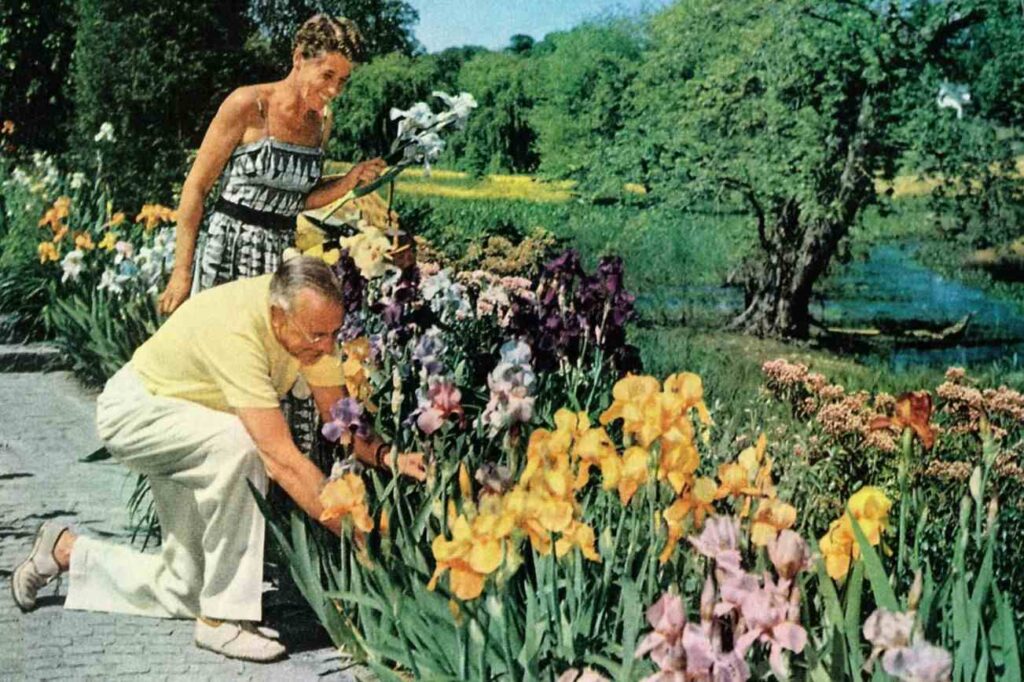
Stedman and Caroline Buttrick admiring their colorful iris beds. National Geographic Magazine, May 1959.
Late May to early June is a spectacular time to visit the Buttrick Gardens and celebrate the annual iris display. Hundreds of irises fill the flower beds, alongside peonies, bleeding heart, columbine, and lady’s mantle. Alas, the iris display was becoming “too blue.” An aggressive tall bearded iris (Iris x germanica) with blue-purple blossoms was crowding out other historic iris varieties, and the once distinct blocks of historical colors were gradually disappearing.
In fall 2025, a team of staff and volunteers at Minute Man National Historical Park began an iris rehabilitation project funded by the Friends of Minute Man National Park’s annual spring Buttrick Gardens Fundraiser. The goal is to restore the blocks of iris colors to preserve the former grandeur of this century-old garden.
Former estate owners, Stedman (1901-1969) and Caroline L. (Keyes) Buttrick (1905-1985) were avid horticulturists who filled the gardens with hundreds of iris varieties. Many irises served as breeding stock, while others were new cultivars developed by the Buttricks themselves. Their irises were planted in clusters, or “blocks,” of color, with each cultivar named, numbered, and mapped – like a curated museum collection. The Buttricks opened their property to the public in late May and early June for the community to enjoy.
After the Buttricks conveyed the property to the National Park Service in 1962, many of the historic cultivars were crowded out, removed, or failed to thrive. The current iris rehabilitation project—a multi-year effort—seeks to restore the historic character of the iris beds by reintroducing blocks of historic iris cultivars while also incorporating new cultivars. Over 30 iris cultivars were rejuvenated and planted (scroll down to view the list). This approach celebrates both the full spectrum of iris colors and the ongoing work of local propagators through the Iris Society of Massachusetts and the Historic Iris Preservation Society.
Because irises are dormant in August and September, staff and volunteers began lifting existing irises from the historic beds, most of which were the dominant blue, but some were potentially historic cultivars no longer blooming. The irises were spread apart and replanted in a garden area at the Barrett Farm. This spring, as the irises bloom, staff and volunteers will document the bloom colors and reintroduce any historic varieties to the Buttrick Garden beds. The Buttrick Garden beds were refurbished with a variety of micronutrients and soil amendments to improve growing conditions.
Over 100 irises in 30 different cultivars were acquired from local breeders and planted in the Buttrick Garden beds. Historic photographs show Stedman and Caroline Buttrick’s iris planted in blocks of color. The new iris plantings replicate this same formation. The arrangement of colors and varieties within the gardens is inspired by the Buttrick’s historic planting patterns.
The Iris Rehabilitation Project Team included Minute Man National Historical Park Resource Management staff, including Sophie Cooke, Sophie Gronbeck, Michelle Lord, Eric Ross, and Margie Brown.
Support the Buttrick Gardens with your gift today!
View the Iris Rehabilitation Project Key
Images below of the flower bed rehabilitation work in fall 2025.
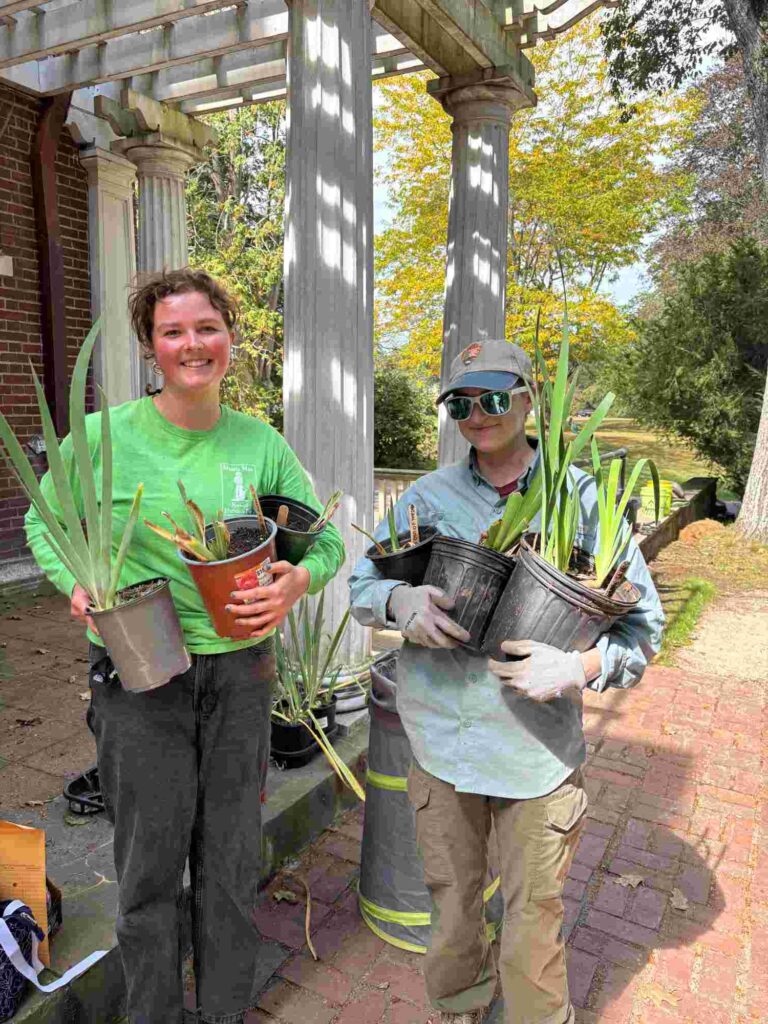
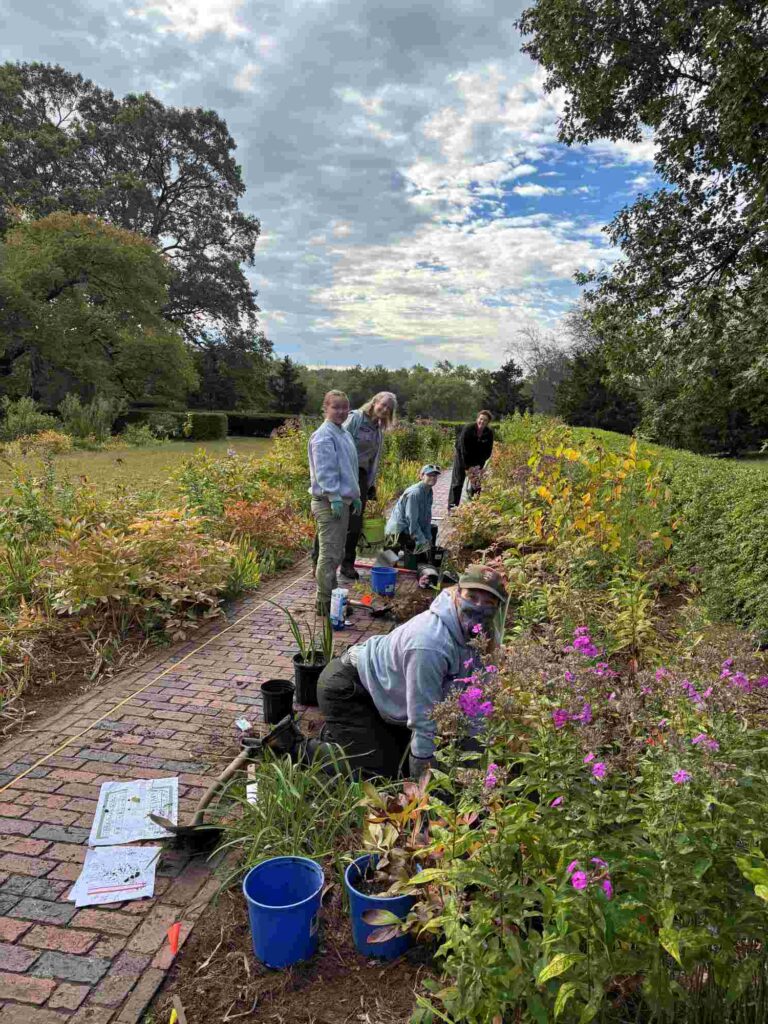
Left: Sophie Cooke and Sophie Gronbeck bring named cultivars to the Buttrick Garden beds. Most irises are from local growers through the Iris Society of Massachusetts (NPS photo). Right: The project team removed some of the aggressive blue tall bearded iris when dormant and replanted blocks of iris cultivars (NPS photo).
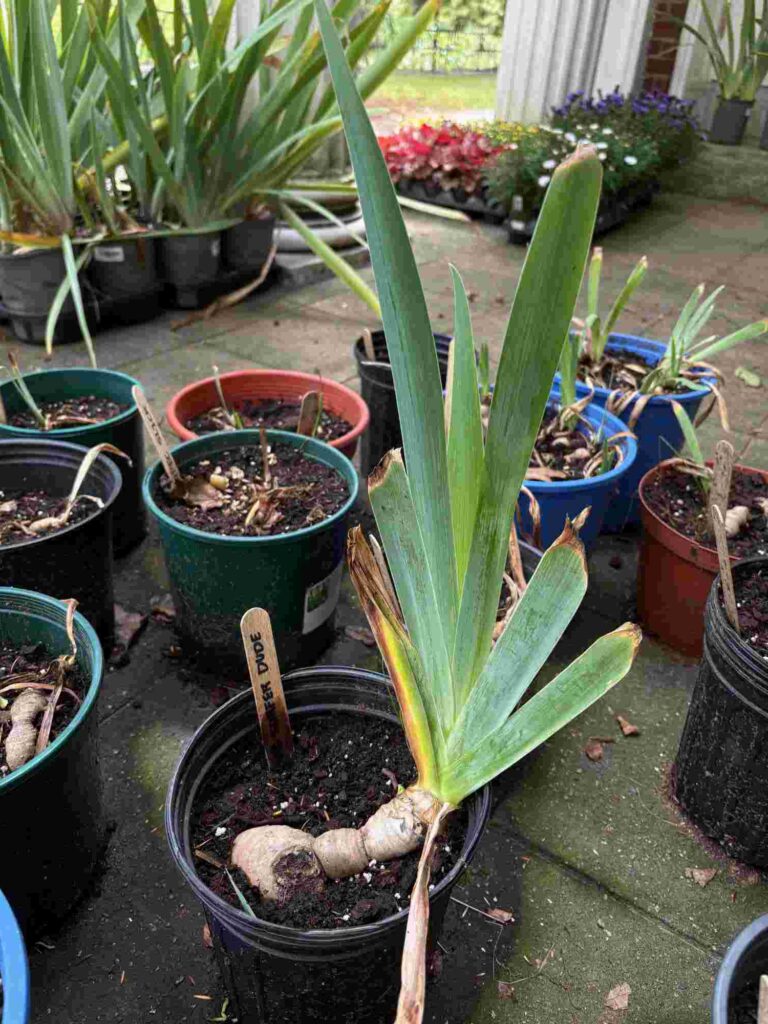
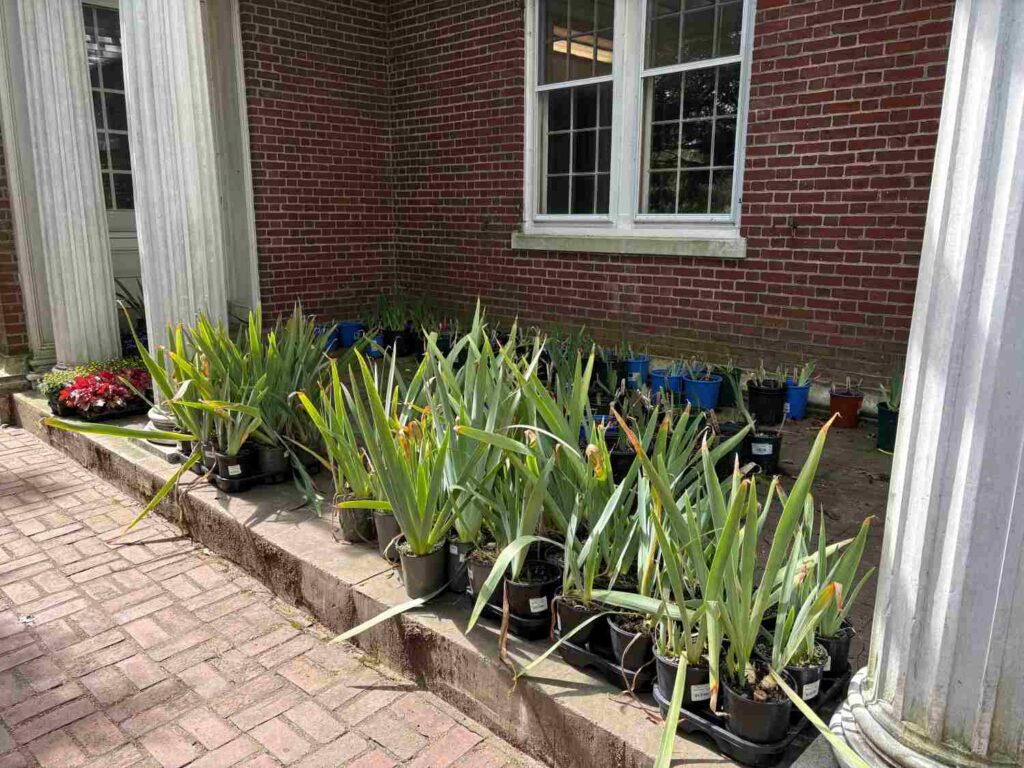
Over a hundred irises in thirty different cultivars were purchased by the Friends of Minute Man Buttrick Garden Fundraiser (Friends photo).
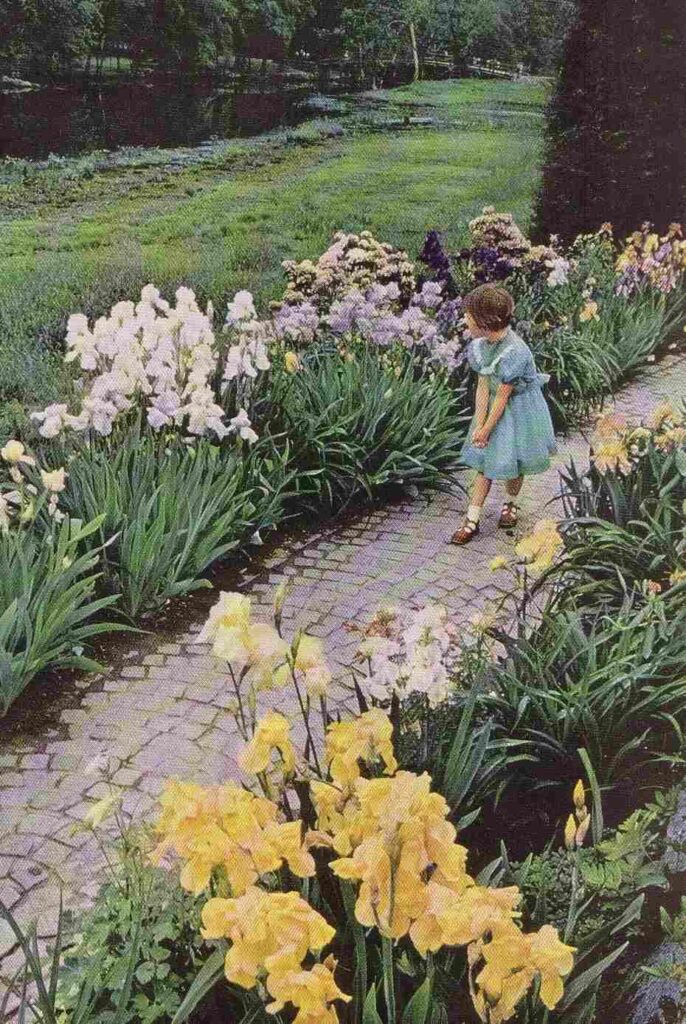
Historic photographs of the Buttrick Gardens, appearing in the May 1959 issue of National Geographic Magazine, helped guide our preservation team’s work to restore blocks of color with historic cultivars.