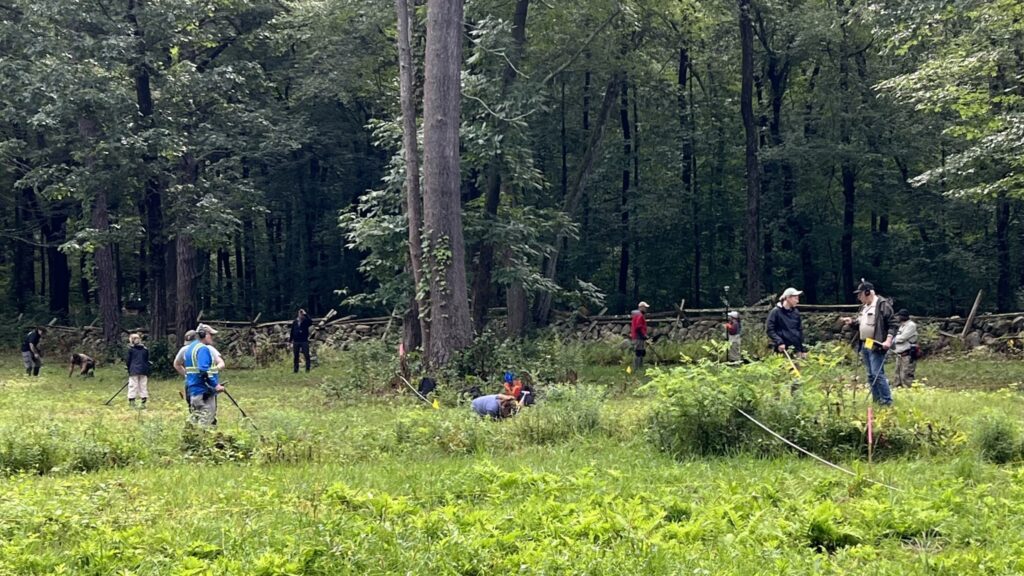
Elm Brook Hill archaeological crew in the summer of 2024.
Written by Joel Dukes, Archaeologist, Northeast Archeological Resources Program; Nikki Walsh, Museum Curator, Minute Man National Historical Park; and Jarrad Fuoss, Park Ranger and Historic Weapons Supervisor, Minute Man National Historical Park.
Following the “shot heard ‘round the world” at the North Bridge on April 19, 1775, the beleaguered British column continued their march 16 miles east towards Boston and safety. As they did so, militia and minute man companies continued to pour into the area to engage the British. At the border between the towns of Concord and Lincoln, the British soldiers found themselves under heavy fire while crossing a lowland marsh and ascending the steep incline of Elm Brook Hill. Although we have historical accounts from participants such as British Lieutenant William Sutherland, Loammi Baldwin from Woburn, and Reverend Edmund Foster from Reading, no physical evidence in the park’s collection corroborated where the fighting on the Elm Brook Hill landscape occurred.
In 2024, with the support of the Friends of Minute Man, Minute Man National Historical Park implemented a project to survey, excavate, curate, and exhibit objects from this deadly firefight. The National Park Service put together a team of archaeologists, ballistic specialists, historians, geospatial specialists, volunteers, and veterans to begin the Elm Brook Hill Battlefield Preservation Project. Thus far, archaeological studies have yielded important insights about troop locations and movements, the 18th-century landscape, and dozens of musket balls and objects that had not seen the light of day in nearly 250 years.
Before fieldwork began at Elm Brook Hill Battlefield, significant planning laid the groundwork for the project. Historic maps, sources from the battle, park reports, and geophysical surveys pointed archaeologists to an area of the landscape that was also known as the “Bloody Angle.” This work was imperative for developing research questions and narrowing down the battlefield survey area. No matter how they are interpreted, battlefields are not empty landscapes or landscapes representing a single day in our history. They are also Native American and early Euro-American landscapes. After a battle, human activity continues, bodies are buried and exhumed, farming continues, roads are built, and in the case of Elm Brook Hill, entire subdivisions are built. When the battlefield became a park, dozens of modern structures were torn down, a memorial landscape was created, and thousands of visitors came to see it. This was the amazing thing about the first phase of this project, not only did we find evidence of the battle at Elm Brook Hill but we found it despite the 250 years of changes to the landscape. This was a running battle, so we were looking for evidence of what was barely a moment in American history.
In the period following the battle, numerous participants published accounts of their experiences in this section of the battlefield. As the British column descended the east side of Brooks Hill, on April 19, 1775 they came to “Lincoln Bridge,” crossing over a small stream known as Elm Brook. Here, about 180 men from the town of Woburn took a position on the high ground of Elm Brook Hill, just east of the bridge. According to Woburn Major Loammi Baldwin,
“We proceeded to Concord by way of Lincoln meeting house . . . ascended the hill and pitched and refreshed ourselves a little…. The people under my command and also some others came running off the east end of the hill while I was at a house . . . and we proceeded down the road and could see behind us the Regulars following. We came to Tanner Brook, at Lincoln Bridge, and concluded to scatter and make use of the trees and walls for to defend us and attack them. We pursued on flanking the . . . I had several good shots. The enemy left many dead and wounded and a few tired . . .”
As the British column plunged ahead past the southern turn, they were soon met by a heavy fire near another sharp bend in the road at the north side of Elm Brook Hill. Militia volunteer Edmond Foster, later described,
“We saw a wood at a distance, which appeared to be in or near the road the enemy must pass. Many leaped over the wall and made for that wood. We arrived in time to meet the enemy. There was then, on the opposite side of the road, a young growth of wood well filled with Americans. The enemy was completely between two fires, renewed and briskly kept up. They ordered out a flank guard on the left to dislodge the Americans from their posts behind large trees but they only became a better mark to be shot at. A short but sharp contest ensued, at which the enemy received more deadly injury, than at any one place from Concord to Charlestown. Eight or more of their number were killed on the spot, and no doubt, many wounded.”
When designing our project, we needed to address the challenges presented by a brief engagement on a large landscape, vague historical accounts, and 250 years of occupation that changed the landscape. Previous successful battlefield preservation projects at Minute Man National Park, such as the one at Parker’s Revenge, have taught us that you need a big crew that includes experts in history, metal detection, landscapes, geographic information systems (GIS), material culture, ballistics, and collections. Our combined crew of over 80 people included the NPS Northeast Archaeological Resources Program, metal-detection instructors from Advanced Metal Detection for the Archaeologist, American Veterans Archaeological Recovery, and staff and interns from Minute Man National Historical Park, American Conservation Experience, and the National Council for Preservation Education.
During the two-week field project, we systematically metal-detected 16.7 acres and recovered 74 musket balls, a possible ram-rod fragment, 18th-century buttons and buckles, and some 18th-century coins, which could have been dropped on April 19th. These artifacts were carefully washed, sorted, and cataloged to ensure their preservation for perpetuity. The individual artifacts tell us about the battle, but nothing is more indicative than the actual musket balls, where they were fired from, and toward whom. As the musket balls were uncovered, their coordinates were recorded so the data could be mapped in GIS and more conclusions could be drawn.
Understanding the significance of a musket ball doesn’t end with recovery and documentation of its location. After the field work, ballistic specialists Doug Scott and Joel Bohy’s analysis of the recovered musket balls documented tool marks, loading impressions, firing marks, impact scarring, weights, measurements, and calibers. Analysis identified five musket balls as British, 53 as Provincial, and since there is crossover between what the British and Provincials were shooting, 13 musket balls were identified as British/Provincial. Four were unidentifiable due to fragmentation.
One of the questions we asked was whether there were differences in lead sources between musket balls used by Provincial troops and those used by British troops. To answer this question, the musket balls were examined with two techniques, Portable X-Ray Fluorescence Spectrometry and Lead Isotope Analysis to determine trace elements and lead sources. Both techniques indicated that there was little difference between British and Provincial musket balls. This isn’t surprising, given that no significant local lead sources were available in the 18th century, provincials in Massachusetts relied on imports. As part of their research, Scott and Bohy had no trouble finding dozens of advertisements before 1775, such as the one for Richard Baker (seen below), as examples of lead entering the colonies.
Only 5 musket balls were unfired. Sixty-nine had been fired. Thirty-eight (51%) of the fired musket balls were low impact and reflect attempts by Provincial troops to hit British troops from a long distance. Many of these were found inside the south bend of Battle Road and appear to represent one side of a firefight between Provincial troops positioned on the west bank of Elm Brook and near the Lincoln Bridge, firing on the rear-guard of the British column.
As we analyze the data recovered so far, the discoveries at Elm Brook Hill have inspired historians to take a closer look at the events of April 19, 1775. The heavy concentration of musket balls fired by provincial weapons into the western downslope of Elm Brook Hill emphasized a long-overlooked aspect of the running battle. While the British column pushed through waves of arriving militia reinforcements, like those from Woburn and Reading, they also struggled to protect the rear of their column from swarms of men rushing to keep up. Concentrations of militia fire at the south bend indicate a hot and heavy musketry aimed at the rear guard of the British column. As militia and minute man companies arrived at the battle, they contended with broken terrain and natural obstacles like Elm Brook. At times, this forced swarms of militia to the rear of the British column, where they attacked and harassed the regulars as opportunity presented itself. At one point later in the day, Lt. Frederick McKenzie of the 23rd Regiment of Foot noted that “in the road indeed in our rear, they [the rebels] were most numerous, and came on pretty close, frequently calling out, “King Hancock forever.”
As the day progressed, casualties in the British companies protecting the rear of the column grew. Research by Minute Man Park Ranger Jim Hollister has identified another interesting point related to the tactical rear-guard engagement at the south bend. The British Marines, the 4th, 23rd, and 47th Regiments of foot, counted nearly 140 men killed, wounded, or captured. These three regiments, acting as the rear-guard of the British column, accounted for nearly 51% of all British Casualties on April 19, 1775. The Elm Brook Hill archaeology project both confirms primary-source accounts of how the battle unfolded and forces us to reconsider aspects of the fighting that need closer examination.
The south bend engagement at the Elm Brook Hill Battlefield also identifies British military tactics related to moving a column of troops through hostile territory. In particular, the Elm Brook Hill project results support the influence of an eighteenth-century book, A Treatise of Military Discipline, by Sir Humphrey Bland, which was printed in the thousands and owned by many British Army Officers. Chapter 8 of the Treatise discusses communications, division of companies and deployment of a vanguard, flanking troops, and a rearguard for a column. The clustering of the Provincial fired musket balls at the south bend was probably an attack on the British rear-guard who as they had been trained, formed up to protect the column at a tactically significant point in the landscape.
Evidence of the south bend confrontation provides new information on the battle and raises questions about what was believed to have happened at the north bend, often referred to as the “Bloody Angle”. Many prior interpretations of historical accounts of the battle at Elm Brook Hill place the main confrontation at the north bend of the road, but we found no evidence of it. However, just past the north bend, we found the edge of what appears to be another heavy engagement near the Joseph Mason farm site. Like all good research, you don’t end up with just answers, you also get new research questions and learning what happened at the Mason Farm will be the next location we investigate within the Elm Brook Hill Battlefield area. Although the Mason home site has been identified, we don’t know where the barns and other structures sat during the battle near the north bend. This spring, we’ll use ground penetrating radar (GPR) to hopefully find those structures. In addition, to help us understand how the Elm Brook Hill landscape has changed, this summer we are bringing in scientists to conduct soil cores. The data from the GPR and soil cores will be combined with earlier research to provide a better understanding of what happened here on April 19th, 1775.
The first phase of the Elm Brook Hill Battlefield Preservation Project was a success on many levels. Perhaps the best part was the group of history-loving folks who came together and cheered each other on whenever someone shouted, “found another one!” upon finding a musket ball. This ongoing research helps to protect the cultural resources in the park, fills in a missing piece of the April 19, 1775, battle and brings the story of Elm Brook Hill to life for a wider audience.
Learn more about the Elm Brook Hill Battlefield Project
Thank you to our supporters
The Friends of Minute Man National Park provided significant funding for the archeological investigation and raised over $260,000 for the project through generous donations from the Town of Lincoln Community Preservation Act Fund, Ogden Codman Trust, Americana Corner, National Trust for Historic Preservation, American Battlefield Trust, the Community Foundation for MetroWest, the Friends of Minute Man board members, and private individuals. Vendors included Marquis Tree, who removed vegetation from the site, and Aloft/Element Hotels, who housed the national team of archaeologists. Thank you to our partners, donors, and vendors for supporting this significant project.
Support Minute Man National Historical Park by becoming a member of the Friends today!
Images
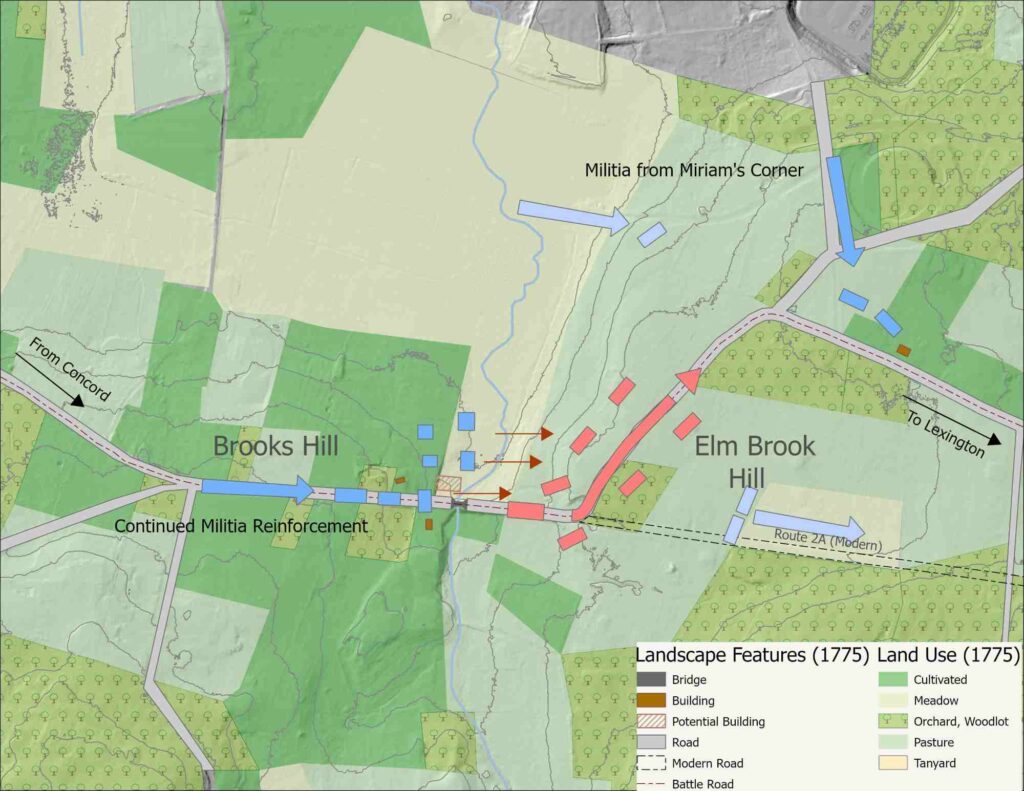
Elm Brook Hill Troop Movements and the Provincial attack on the British Rear Guard
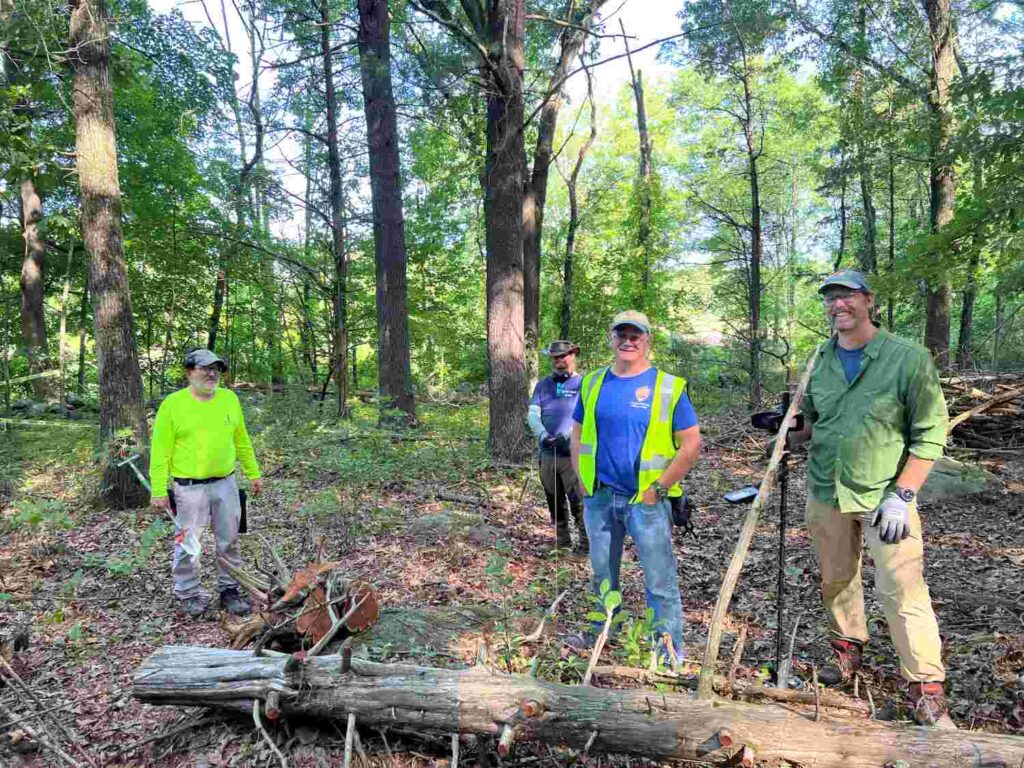
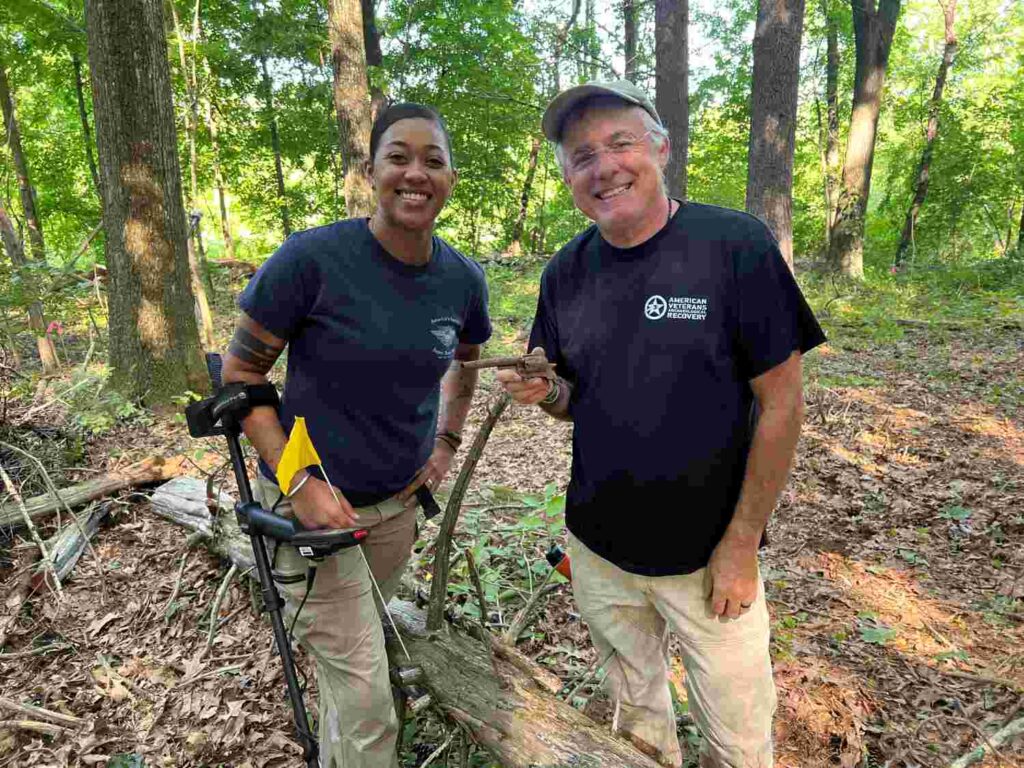
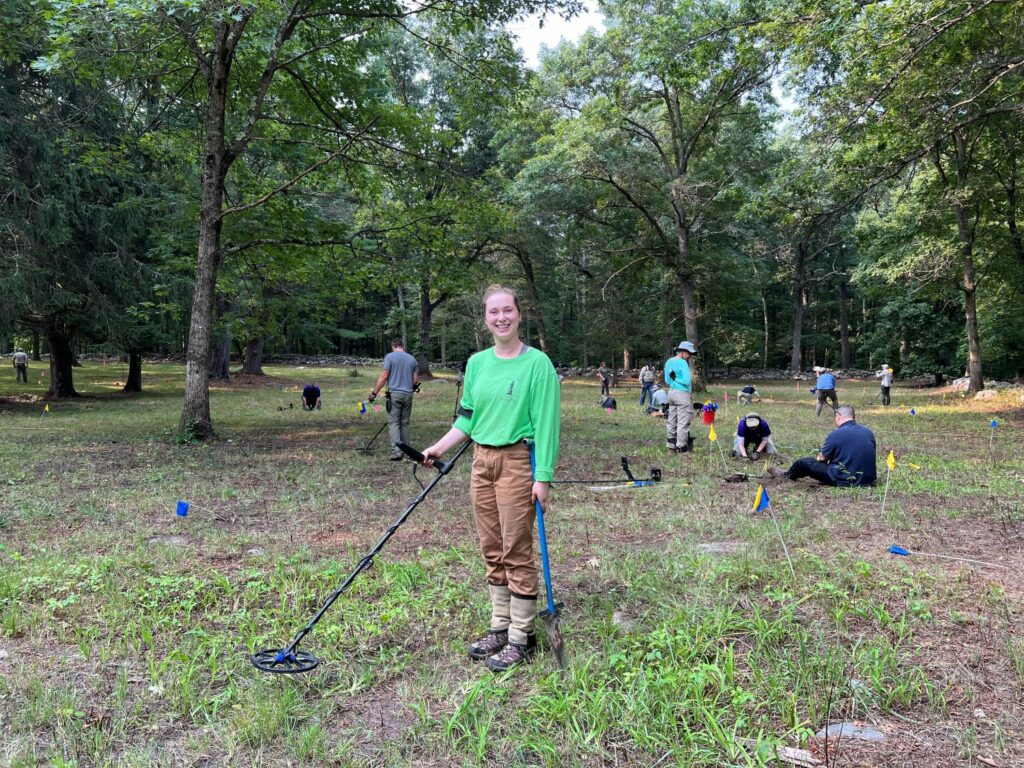
Archaeological crew in the summer of 2024.
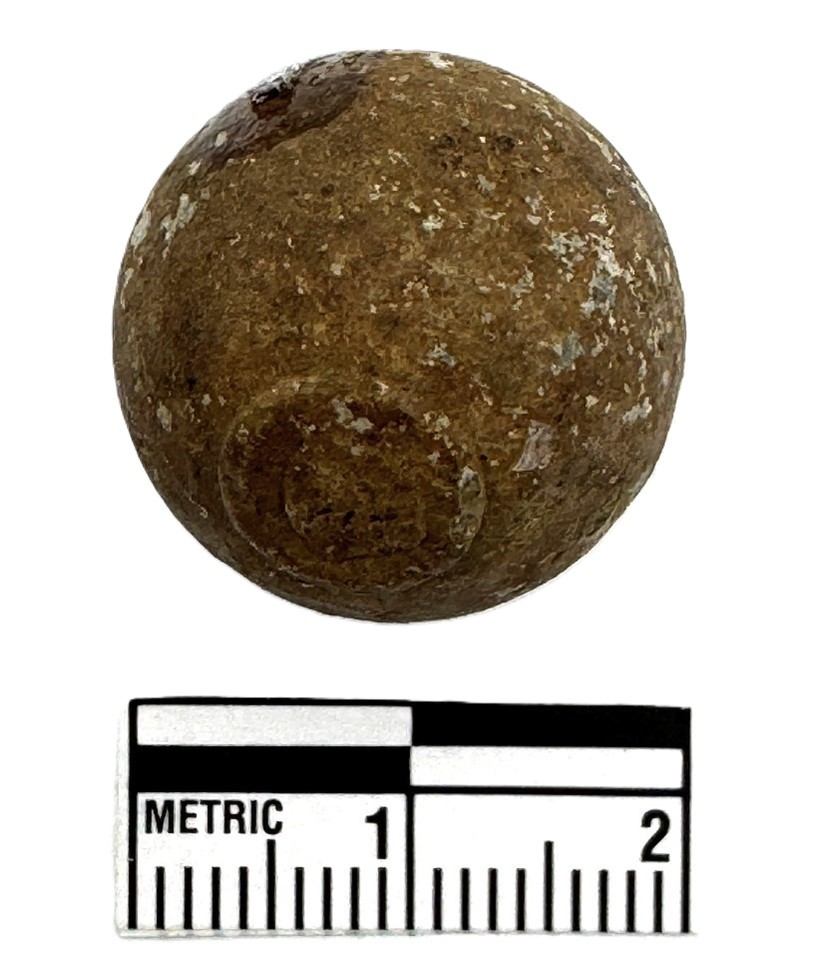
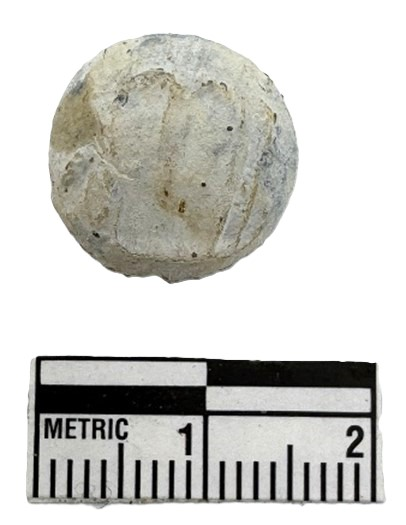
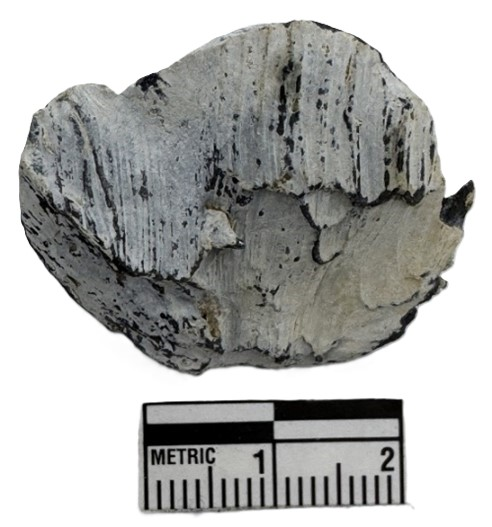
From left to right: Musket balls found during the Elm Brook Hill archaeological project. Unfired Provincial musket ball with casting sprue and mold seam evident, Provincial fired musket ball with minimal impact scaring, Provincial musket ball with extreme scaring, the result of hitting a hard surface, probably a rock.
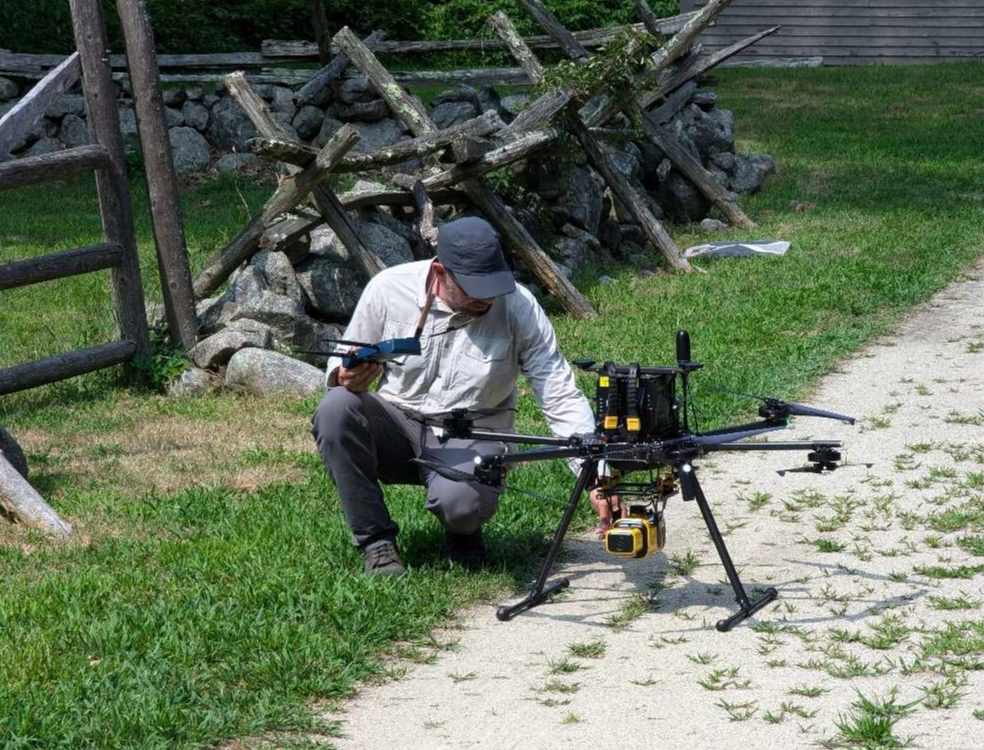

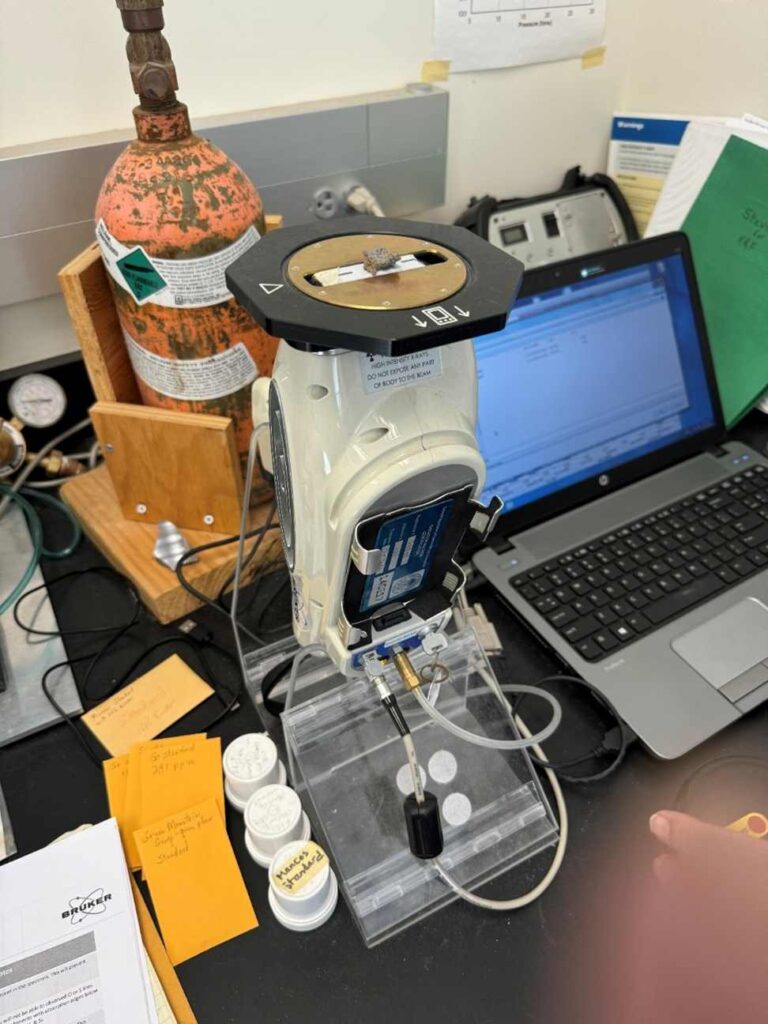
From left to right: Technology used to investigate Elm Brook Hill. IF1200A sUAS with LiDAR Sensor setting near Hartwell Tavern, measuring a lead ball with digital micrometer, the Bruker pXRF unit with a musket ball on the sensor.
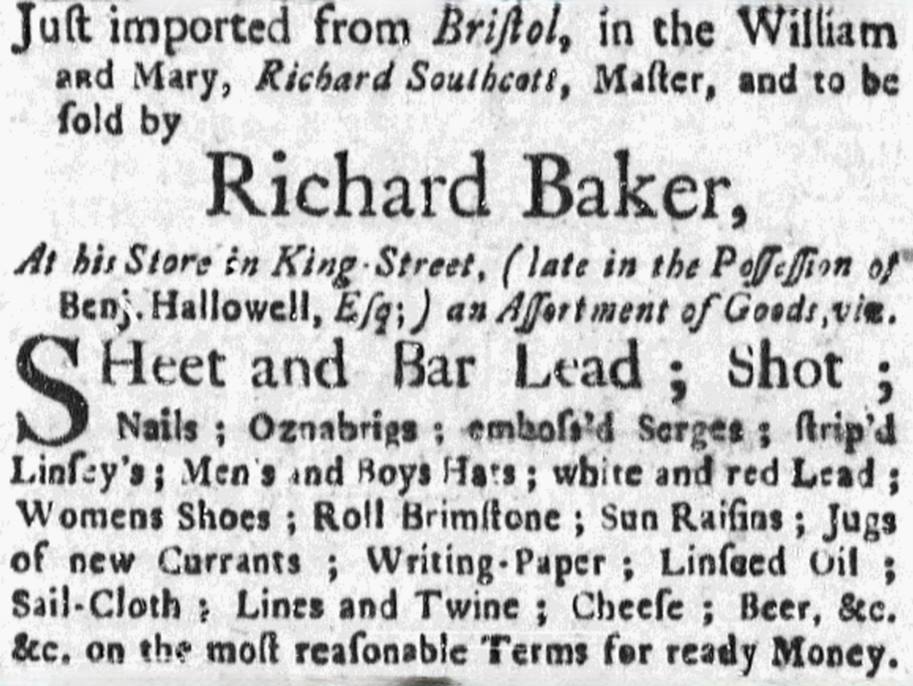
Richard Baker’s offering goods from Bristol, including bar lead and shot (Boston News Letter, May 31, 1764)