Written by Holden Moore, Resilient Forestry Intern, Minute Man National Historical Park
For the past six months, I have been working with the Forest Stewards Guild at Minute Man National Historical Park as a Resilient Forestry Intern, supporting forest restoration through the National Park Service’s Resilient Forests Initiative (RFI). At the center of this work is a seemingly simple question: What makes a forest resilient?
Across the Northeast, forests face a range of stressors, including invasive plants, introduced pests and pathogens, heavy deer browse, extreme weather, and the effects of climate change. Ash trees have been heavily impacted by emerald ash borer (EAB), while beech leaf disease and beech bark disease threaten our American beech populations. Together, these stressors can make it increasingly difficult for our native forests to regenerate and persist into the future.
This is an important concern within eastern national parks. Long-term NPS monitoring has shown that many park forests retain the structure of older forests, with large trees, standing deadwood, and fallen woody material. However, many of these forests lack enough young trees to eventually replace those in the existing canopy, in what is known as regeneration debt.
The Resilient Forests Initiative was developed to address these regeneration challenges through active forest management. At Minute Man, three forest parcels have been selected for this restoration work. Much of my work this season has focused on assessing these sites and preparing them for the next generation of forest. Long-term goals include encouraging natural regeneration and planting native trees to establish a diverse future canopy. However, building the next forest does not necessarily begin with planting.
One of the largest challenges is invasive vegetation. Invasive species management at Minute Man takes many forms, from hand-pulling plants such as garlic mustard and black swallow-wort to cutting and dabbing vines such as porcelain berry or bittersweet, to foliar herbicide applications across larger areas. In areas with particularly dense invasive cover, we also have large-scale mechanical treatment planned using mulching equipment. The goal is to reduce invasive vegetation to a level where native plants and future tree plantings have the space, light, and resources necessary to establish. Because invasive plants can resprout or return from existing seed banks, reaching this point may require several years of treatment and continued follow-up.
Support Minute Man National Historical Park by becoming a member of the Friends today!
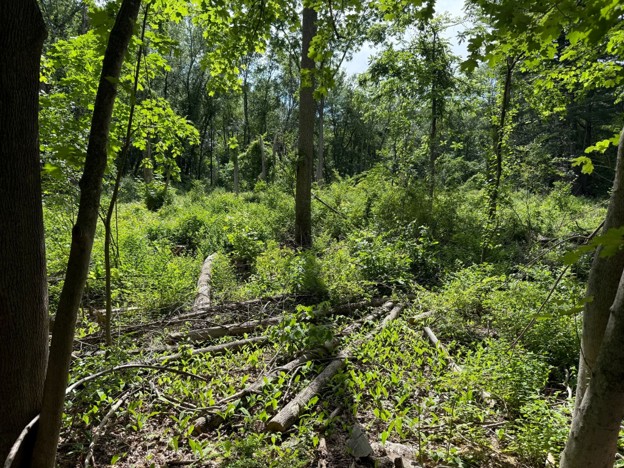
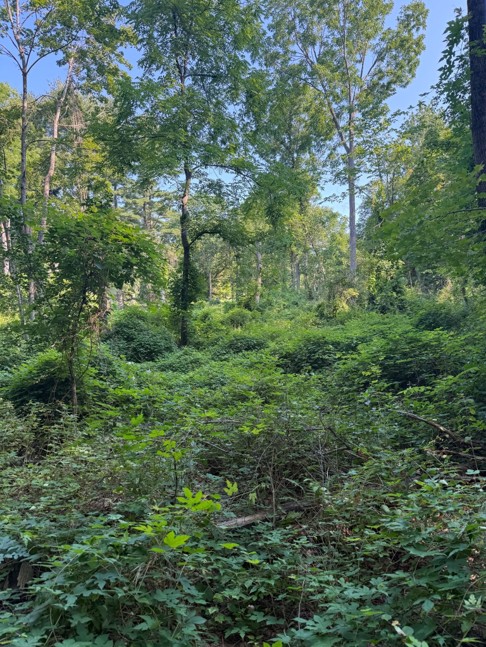
Image above: Invasive thicket that is planned for mulching
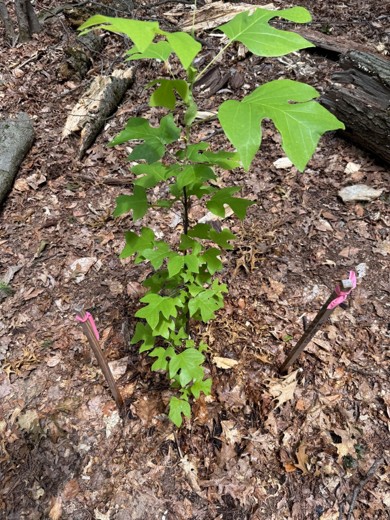
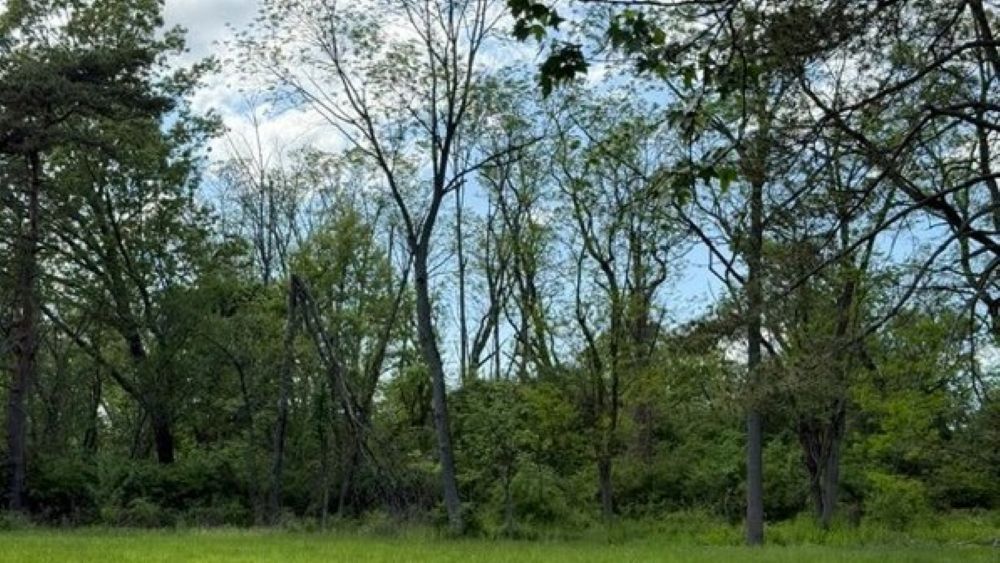
Images below: Area where ash have been removed due to emerald ash borer, tulip tree planted in an area where beech are declining, large area covered in invasive porcelain berry