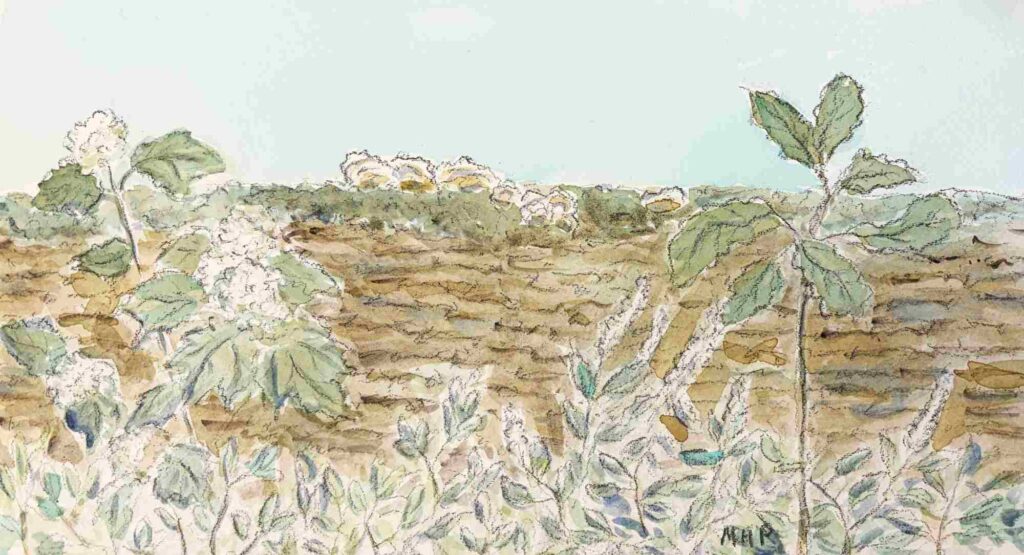
Regeneration of the forest understory after the fall of an ash tree, illustrated by Maria Park.
After a snowy winter, spring is starting to emerge at Minute Man National Historical Park. On a walk in the Park, you may see leaves budding out and hear the sounds of birds serenading in the forest stands. You may also notice some felled trees by the side of the trails and historical areas, such as along Monument Street in Concord near the Reformatory Trail. What’s going on?
Ash trees at Minute Man and across the United States are dying in large numbers due to the spread of an insect called the emerald ash borer. Beech trees are also dying because of a microscopic nematode that causes beech leaf disease. Other challenges facing the park are overgrown thickets of introduced plants that are suppressing the establishment and growth of native plant species. The Resilient Forests Initiative of the National Park Service supports Minute Man and other National Parks in the Northeast Region to address these ecological concerns.
A forest restoration process at Minute Man is taking place over several years. The Forest Stewards Guild and Redstart, Inc. are helping to plan, organize, and do the boots-on-the-ground work at Minute Man alongside Park staff. Some of the work includes removing overgrown thickets, planting native species, and cutting dying trees that pose hazards to visitors and staff of the Park. If you see downed ash trees, do not fret! It is all part of the process to kick-start a more resilient forest.
Trees and other plants grow on their own timeline, and thus restoration work also takes time. For a while, the forest landscape may look like it’s full of gaps. But trust nature to heal and grow. Humans, as part of the Resilient Forests Initiative, are helping facilitate the healing process. If there is a patch of plants in your backyard or neighborhood, perhaps you can help nature thrive in your area as well.
Written and illustrated by Maria Park, a Science Communication in the Parks Fellow of the Ecological Society of America and the National Park Service.
Support Minute Man National Historical Park by becoming a member today!
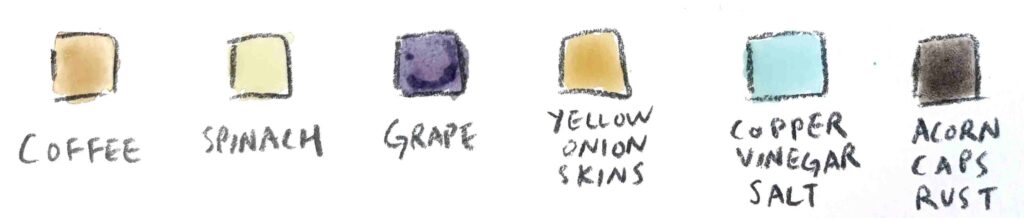
Species featured in the illustration above include Fraxinus americana (white ash), Viburnum acerifolium (maple-leaf viburnum), Clethra alnifolia (sweet pepperbush), Gaylussacia baccata (black huckleberry), Guercus bicolor (swamp white oak), Trametes versicolor (turkey tail fungus), and moss spp. These are species found at Minute Man National Historical Park. Inks were created using the ingredients shown below.
Learn more about Saving the Beeches at Minute Man.
Learn more about the National Park Service’s Resilient Forests Initiative.